
Sustainability Quest Prep Tips and Tricks
Ace the Sustainability Quest with Smart Prep – Learn, Practice, and Go Green!
Quiz Prep Notes for Grades 3–5
Theme: Our Planet, Our Responsibility
What is Sustainability Day?
Sustainability Day celebrates how we can protect nature and live in balance with our planet. It reminds us to use what we have wisely — water, energy, trees, and air — so that future generations can enjoy them too!
🗓 Celebrate on: October 23
💡 Goal: To make every child a Planet Protector by learning fun, everyday habits that save our Earth.
🧠 How to Prepare
Review the 5 topics:
1️⃣ Power Up! – Energy & Water Conservation
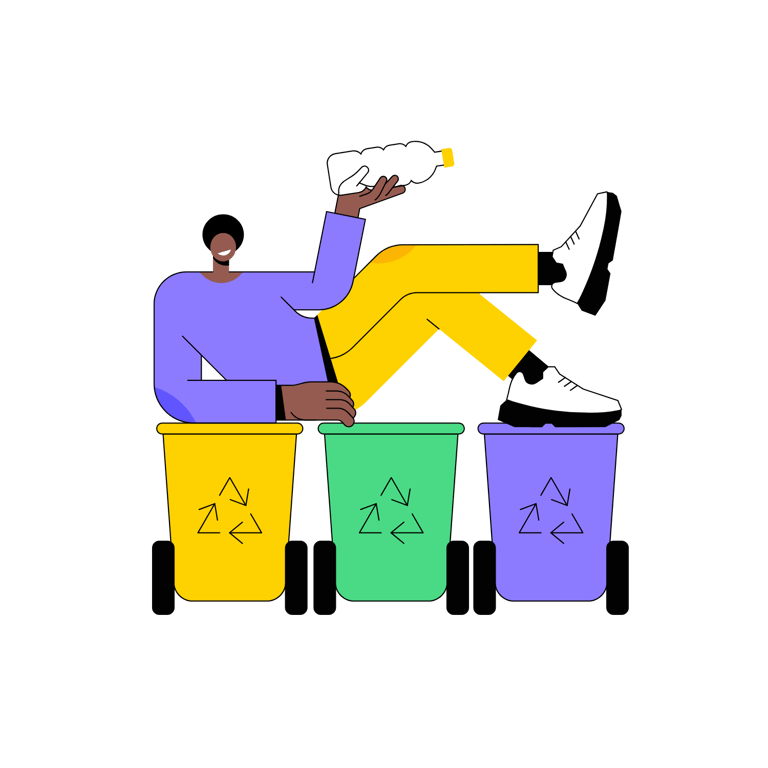
2️⃣ Trash to Treasure – Recycling & Waste Management
3️⃣ Wild & Water Wonders – Life on Land & Below Water
4️⃣ Nature’s Tech – Simple Machines
5️⃣ Go Green Routine – Eco-Friendly LivingPlay the “Sort the Trash” or “Solar Power” games linked via QR codes.
Try our Practice Quiz
1️⃣ Power Up! – Energy & Water Conservation
🔹 Key Concepts:
Energy is the power we use to do work — like turning on a fan, cooking food, or driving a car.
Renewable energy comes from nature and never runs out — e.g., sun (solar), wind, and water (hydro).
Non-renewable energy comes from fuels like coal and petrol — they cause pollution and can run out.
Water conservation means saving every drop by using it wisely.
💡 Smart Habits:
Turn off lights and fans when you leave a room.
Fix leaky taps.
Reuse water for plants.
Use buckets instead of long showers.
Prefer daylight over electric lights.
2️⃣ Trash to Treasure – Recycling & Waste Management
🔹 Key Concepts:
Reduce, Reuse, Recycle — the 3 Rs of waste management.
Biodegradable waste (like food and paper) breaks down naturally.
Non-biodegradable waste (like plastic) does not decompose easily.
Recycling means turning old things into new — e.g., waste paper → new notebooks.
Composting turns food waste into fertilizer for plants.
💡 Smart Habits:
Carry cloth bags, not plastic.
Sort waste into dry and wet bins.
Donate old toys and books.
Upcycle — make crafts from used bottles and boxes.
3️⃣ Wild & Water Wonders – Life on Land and Below Water (SDGs 14 & 15)
🔹 Key Concepts:
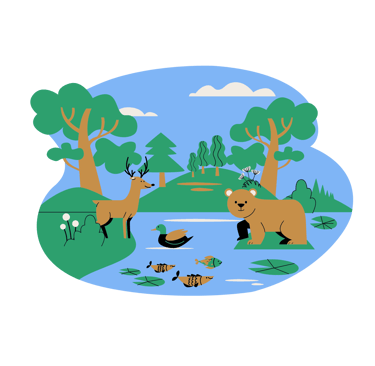
SDG 14 (Life Below Water): Protect oceans, rivers, and aquatic life.
SDG 15 (Life on Land): Protect forests, wildlife, and plants.
Forests give us oxygen, medicines, and food.
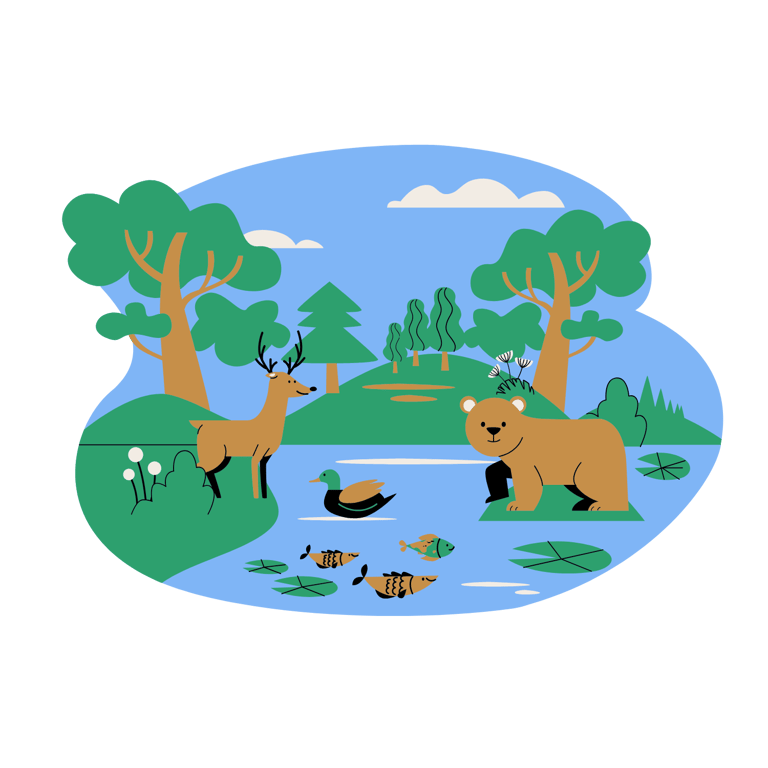
Animals and plants depend on each other for survival — this is called an ecosystem.
Pollution, deforestation, and overfishing harm biodiversity.
💡 Smart Habits:
Plant trees and care for them.
Avoid throwing waste in water bodies.
Learn about endangered species.
Support wildlife sanctuaries.
4️⃣ Nature’s Tech – Simple Machines in Everyday Life
🔹 Key Concepts:
Simple machines make work easier using less effort.
Types:
Lever (see-saw, scissors)
Pulley (flagpole)
Inclined Plane (ramp)
Wheel & Axle (bicycle)
Screw (jar lid)
Wedge (knife, axe)
Nature also inspires machines — e.g., bird wings → airplanes!
💡 Smart Habits:
Observe machines around you.
Repair instead of replace when possible.
Learn how things work — curiosity saves waste!
5️⃣ Go Green Routine – Eco-Friendly Living Made Fun
🔹 Key Concepts:
Eco-friendly living means making choices that are good for the planet.
Avoid single-use plastic.
Grow plants at home or school.
Save paper — go digital when possible.
Share, borrow, and donate.
💡 Smart Habits:
Celebrate “No Plastic Day.”
Join an Eco Club or community clean-up.
Decorate with recycled art.
Be a “Green Influencer” — spread the word!
PLANET PROTECTORS IN ACTION



Quiz Prep Notes for Grades 6–8
Theme: Smart Science for a Greener Tomorrow
(Because saving the planet is the smartest science project ever!)
What is Sustainability Day?
Sustainability Day celebrates how we can protect nature and live in balance with our planet. It reminds us to use what we have wisely — water, energy, trees, and air — so that future generations can enjoy them too!
🗓 Celebrate on: October 23
💡 Goal: To make every child a Planet Protector by learning fun, everyday habits that save our Earth.
1️⃣ Power Shift – Renewable Energy (Solar ☀️ | Wind 🌬️ | Bio 🌱)
🔹 Key Concepts:
Energy powers our lives — lights, transport, gadgets, factories.
Renewable energy comes from natural sources that never run out — Sun, Wind, Water, Biomass, Geothermal.
Non-renewable energy like coal, oil, and gas causes pollution and climate change.
🌞 Solar Power:
Converts sunlight into electricity using solar panels.
Used for: solar lamps, heaters, and water pumps.
🌬️ Wind Power:
Wind turbines turn moving air into electrical energy.
Wind farms produce clean energy for towns and villages.
🌱 Bioenergy:
Comes from plants, crop waste, or animal manure.
Produces biogas — a clean cooking and lighting fuel.
💡 Quick Fact:
India is among the top 5 countries in the world for solar and wind energy capacity!
2️⃣ Carbon Counts – Climate Change & Footprints That Matter
🔹 Key Concepts:
Climate change means long-term changes in Earth’s temperature and weather patterns.
Greenhouse gases like carbon dioxide (CO₂) trap heat and cause global warming.
A carbon footprint is the total amount of CO₂ we produce through daily activities.
🔹 Effects:
Melting glaciers
Rising sea levels
Heatwaves, droughts, floods
Loss of wildlife habitats
🌿 How to Reduce It:
Use public transport, walk, or cycle.
Switch to LED bulbs.
Plant trees — they absorb CO₂.
Eat local and reduce food waste.
💡 Quick Fact:
Planting one tree can absorb about 22 kg of CO₂ per year!
3️⃣ Smart City Life – Tech That Cares for the Planet
🔹 Key Concepts:
Smart cities use technology to make life eco-friendly and efficient.
Use of IoT (Internet of Things) for controlling traffic lights, streetlights, and waste management.
Smart buildings use solar panels, rainwater harvesting, and motion-sensor lighting.
E-vehicles reduce air pollution.
💡 Examples:
Smart bins that signal when full.
Smart irrigation systems that save water.
Apps that monitor air quality and pollution.
💡 Quick Fact:
Hyderabad and Pune are among India’s top Smart Cities adopting green technologies.
4️⃣ Wild Code – Conserving Biodiversity through Science
🔹 Key Concepts:
Biodiversity = variety of plants, animals, and microorganisms in an ecosystem.
Every species plays a role in balance — removing one affects all.
Conservation means protecting and managing ecosystems.
🔹 Science in Conservation:
Drones to track wildlife and prevent poaching.
GPS tags on endangered animals.
DNA research for species identification.
Artificial coral reefs to restore marine life.
💡 Quick Fact:
India has over 100 national parks and 550+ wildlife sanctuaries working to conserve biodiversity.
5️⃣ Planet Hackers – Young Innovations That Save the Earth
🔹 Key Concepts:
Young minds can solve global problems using STEM and creativity.
💡 Inspiring Examples:
Gitanjali Rao – invented a water testing device for lead detection.
Vinisha Umashankar – designed a solar-powered ironing cart.
Students’ innovations – robots that plant trees, waste-separating machines, and clean-energy models.
💡 Ways You Can Contribute:
Join science clubs and innovation fairs.
Build models using recycled materials.
Research local environmental problems and suggest tech solutions.
💚 THE SUSTAINABILITY PLEDGE
✋ I promise to think green and act smart!
✅ I will switch off lights and fans when not needed.
✅ I will reduce plastic use and recycle more.
✅ I will save water and energy every day.
✅ I will learn about new eco-innovations.
✅ I will be part of the change my planet needs.
⚡ECO INNOVATORS: THE GREEN TECH SQUAD





Theme: STEM for Sustainable Development
(Because the future belongs to innovators who build for the planet, not against it!)
🌍 What is Sustainability Day?
It’s a day to celebrate innovation with impact — using Science, Technology, Engineering, and Math (STEM) to build a sustainable future.
It’s not just a date; it’s a global call to action!
🗓 Date: October 23
🌐 Purpose: To prepare young minds to solve real-world environmental challenges using technology and design thinking.
⚡ Contest Details
Event: Learnzilla Sustainability Quest 2025 – Senior Quiz & Innovation Challenge
Who Can Join: Grades 9–12 students
Date: October 23, 2025
Format: Online quiz + optional idea pitch round
Rewards:
🏆 Top 10 winners – National e Certificate
🧠 How to Prepare
Focus on 5 futuristic themes:
🤖 AI for Earth – Data & Climate
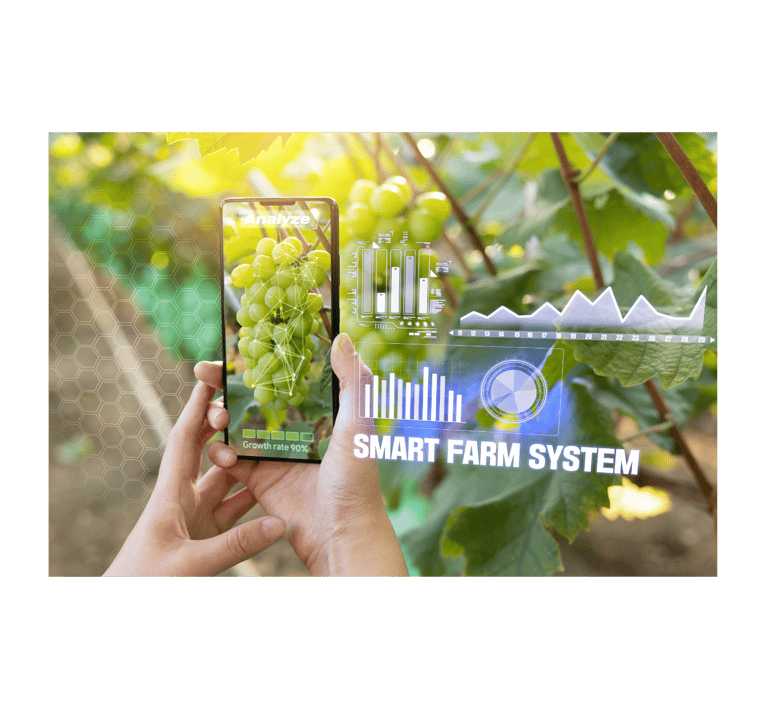
🌱 AgriSmart Revolution – Smart Farming
♻️ Waste Not 2025 – Circular Economy
🤖 Robo Rescuers – Robotics for Environment
🏙 Build Better Now – Sustainable Infrastructure
1️⃣ AI for Earth – Tech Brains Fighting Climate Change
🔹 Key Concepts:
Artificial Intelligence (AI) helps analyze massive data to find eco-friendly solutions.
AI systems can predict floods, monitor forests, and track pollution in real-time.
Machine Learning models identify deforestation, illegal fishing, and wildlife trafficking through satellite images.
Smart grids use AI to manage electricity supply efficiently, reducing energy waste.
💡 Example:
Microsoft’s “AI for Earth” uses data analytics to support global sustainability projects.
AI models predict crop diseases and suggest timely actions to farmers.
🔹 DIY Idea:
Use an open dataset (like rainfall or pollution data) in a simple AI tool (e.g., Teachable Machine or Google Colab) to visualize climate trends.
2️⃣ AgriSmart Revolution – Clean Energy & Smart Farming
🔹 Key Concepts:
Smart farming uses IoT sensors, drones, and data to make agriculture efficient.
Soil sensors detect moisture and nutrients.
Drones monitor crop health and spray fertilizers precisely.
Solar-powered irrigation systems reduce carbon emissions and water waste.
💡 Example:
Indian startups like Fasal and CropIn use AI + IoT for precision farming.
Solar cold storage units help farmers preserve produce sustainably.
🔹 DIY Idea:
Build a Mini Smart Irrigation System using Arduino + moisture sensor + water pump powered by a solar panel.
3️⃣ Waste Not 2025 – Circular Economy & Waste-to-Wealth
🔹 Key Concepts:
Circular economy means keeping materials in use for as long as possible - reuse, repair, recycle.
Waste to wealth converts waste materials into valuable resources.
Examples: biogas from food waste, recycled plastic bricks, upcycled furniture.
STEM plays a huge role - chemical engineers, material scientists, and innovators design sustainable solutions.
💡 Example:
Plastic waste → roads (used in India by engineer Rajagopalan Vasudevan).
Organic waste → biogas for electricity.
E-waste recycling → recovery of gold, copper, and silver.
🔹 DIY Idea:
Design a poster or 3D model explaining how waste from your school can be reused or upcycled.
4️⃣ Robo Rescuers – Robotics in Environmental Monitoring
🔹 Key Concepts:
Robots can monitor air, water, and soil quality in hazardous or hard-to-reach places.
Underwater robots study coral reefs and marine life.
Drone bots track deforestation, forest fires, and pollution sources.
AI + Robotics enable faster environmental data collection and disaster response.
💡 Example:
OceanOne — a humanoid robot used for deep-sea research.
WasteBot — collects floating garbage from rivers and lakes.
Fire drones — used for early forest fire detection.
🔹 DIY Idea:
Create a simple obstacle-avoiding robot with sensors and imagine its role in a forest monitoring mission.
5️⃣ Build Better Now – Sustainable Infrastructure & Innovation
🔹 Key Concepts:
Sustainable infrastructure means buildings, roads, and cities designed to reduce environmental impact.
Uses renewable energy, green materials, and efficient designs.
Green buildings: use solar panels, rainwater harvesting, natural lighting, and ventilation.
Smart grids & smart homes: reduce waste and optimize energy use.
💡 Example:
Green Building Rating Systems (like GRIHA and LEED) promote eco-friendly construction.
3D-printed houses using recycled materials reduce construction waste.
🔹 DIY Idea:
Draw a blueprint for your dream Smart Eco Home using renewable energy and sustainable design ideas.
🌍 FUTURE BUILDERS: STEM for Planet Earth 2.0





Join our community of lifelong learners today!
Contact Us
admin@learnzilla.in
Learnzilla by
Lorven Edutainment Private Limited
© Learnzilla 2025. All rights reserved.
+91 9640531590